

Let's talk about Apple's Education Ad
Without friction, nothing sticks
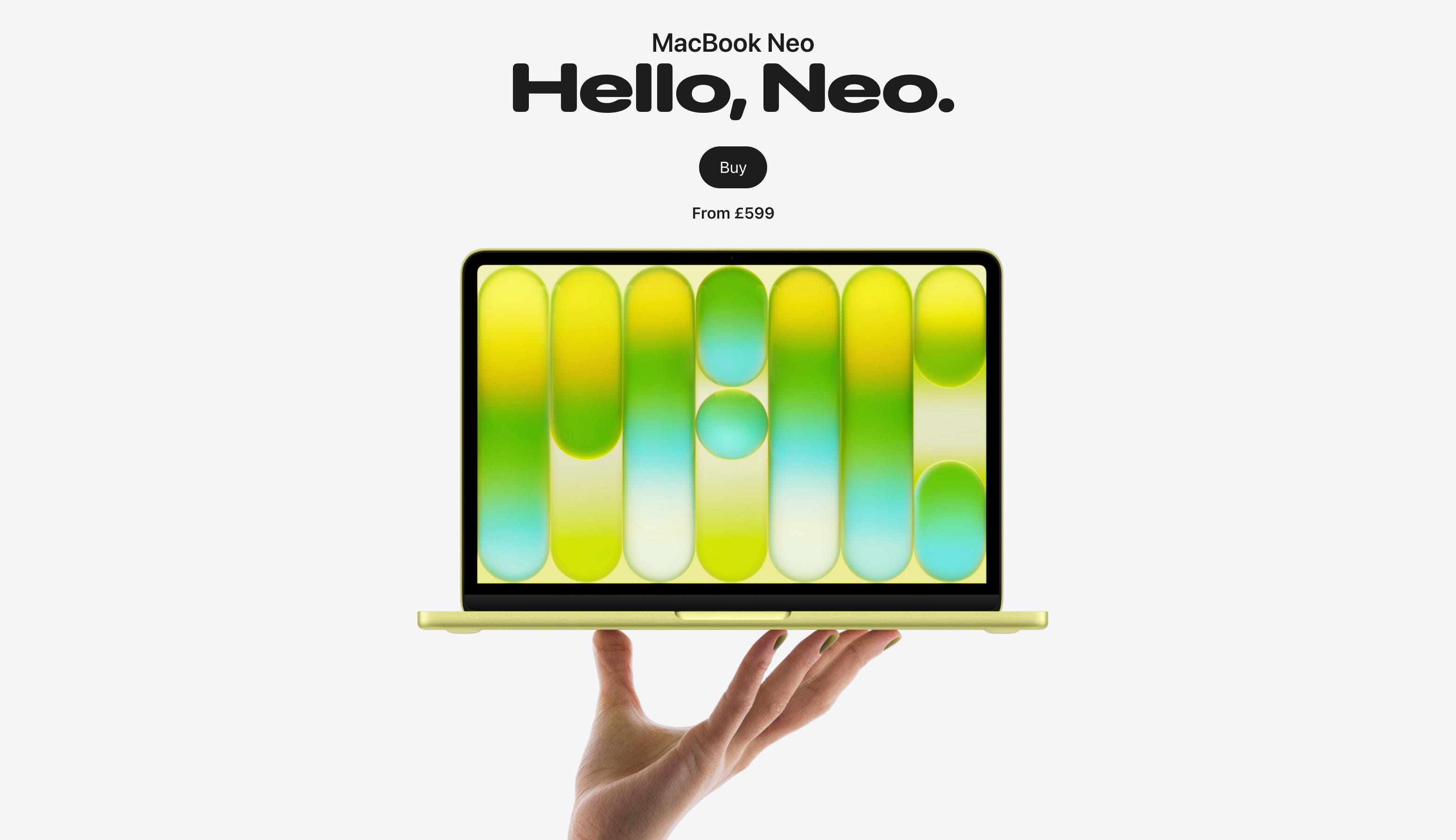
This week, Apple released a new ad on YouTube titled, ‘Apple Education: Ready for every learning opportunity’. While ostensibly pitched as an ad for Apple Education, it’s primarily an ad for the new MacBook Neo—a cheaper, more colourful laptop, clearly pitched at young people.
Let’s see what Apple offers in the video.
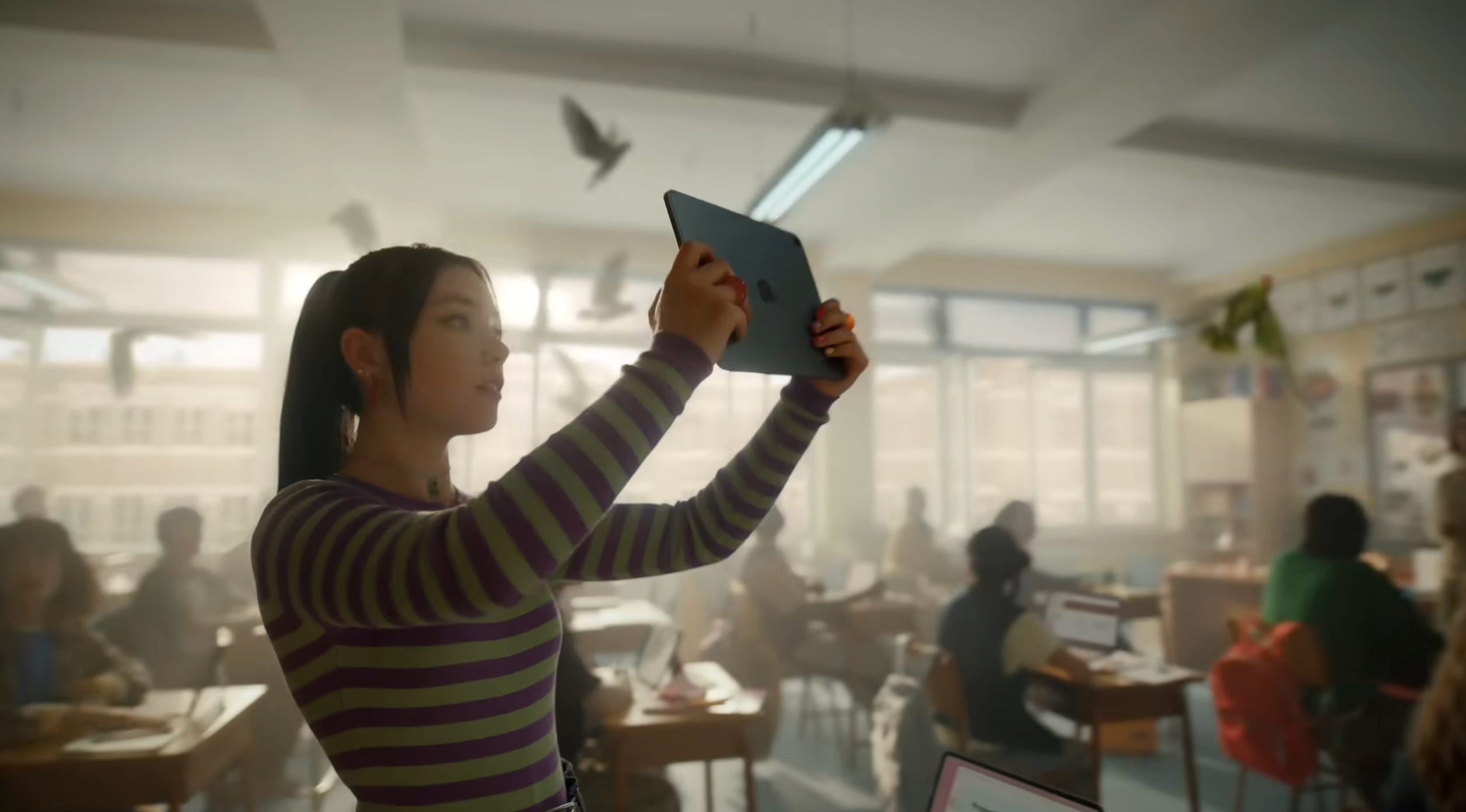
The premise is a classroom which comes to life when a flock of tropical birds fly in, swirling around and miraculously not crapping all over the place1. The teacher asks the class to identify the birds. One kid points their iPad camera at the bird and gets an answer immediately. “It’s an Amazona,” she says proudly. “They live in flocks,” says another. “And they’re very loud,” announces a third—perhaps unnecessarily, considering they are flying above their heads at that moment.
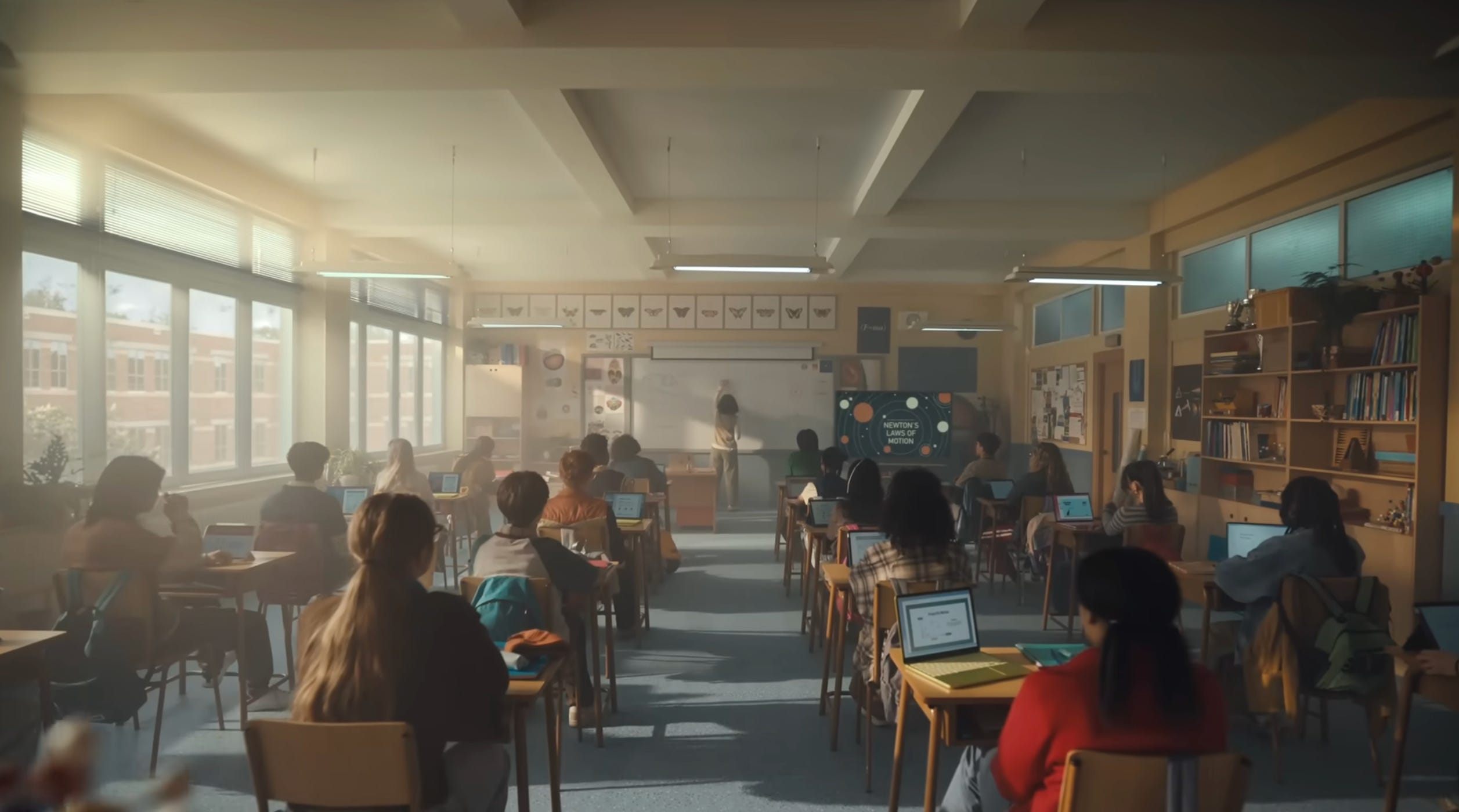
The teacher then presents to the class via Apple’s Classroom app, and the class goes into breakout rooms—sorry, I mean splits into groups—and learn about flight via cool gimmicks like observing a 3D plane flying over their desk, and playing around with aerodynamics in realtime (that bit looked interesting I can admit). They work on a Keynote presentation, finally airdropping it to the teacher.
And there it is folks, job done. Kids, educated. ✅
What Apple thinks education is
Judging by the video (and Apple’s education page on their site), they see education as providing the quickest route to information possible. And of course, they do this very well. To discover a bird genus, point and click. Type a prompt and get answers back. The ad doesn’t mention it, but the MacBook Neo has native AI, meaning you can click a button and have your writing rewritten, instantly. You can create a beautiful presentation, whether or not you have any artistic or design inclination. And you can send the presentation straight to the teacher, definitely not naming the file mrs_thompson_has_hairy_legs.pdf or anything like that. Because kids don’t do that sort of thing.
Apple thinks EdTech is successful when it minimises the friction of learning2. Get to the answer quicker, produce the presentation more easily. This is their business logic entering the classroom. But class is not about roleplaying the office environment.
Friction makes learning stickier
If Apple’s goal is to get to the answer as fast as possible, they may be succeeding. As with ChatGPT and others (and Google before that3) the data suggests that most of us are impatient for answers now, as soon as the thought occurs to us4. The idea of sitting in ignorance when we have the option to discover immediately seems alien.
But in education, there’s a key difference. The answer is only part of the equation. Learning out how we get to the answer is the purpose of education, is it not? It’s more than knowledge. It’s understanding.
Any schlemiel5 can look up an answer on the internet. But as soon as you need to go deeper, the answer will not be enough.
Consider coding. There’s a site that all developers know called Stack Overflow, where coders post problems online for other coders to help resolve. It’s a magnificent resource. But the clear and present danger is that you take the answer, copy and paste it into your project, moving on without gaining any further understanding of the problem and solution. Not to mention, you’ve just put someone’s code into your project without knowing what it does. Bad form.
Or think of those astronauts on Apollo 13, the moon landing trip that went wrong when the electrical and life-support system went offline. Their understanding and knowledge of engineering, science, physics, electronics, maths, etc., was so advanced that they were able to cobble together new components to fix their craft in the vacuum of space to get safely home.
Or what about a surgeon who, while operating, discovers something unexpected and has to act quickly in a life-or-death scenario. There’s no time for looking up answers - this is where deep, earned knowledge and understanding is deployed in realtime.
The 90s experience

In the Matrix (1998), the fake digital world that is fed directly into the brains of the majority of humans displays the world as it stood in the 1990s—which is accepted as the “pinnacle” of human civilisation. I’m beginning to think the machines were right.
I’ve lamented before about how kids today have missed out on the 90s experience of building (and breaking) computers:

Apple has taken this approach to the extreme with hard-soldiered components and parts. Stable, well-made, but unexciting. It works! But we can no longer have any hardware fun, which I think is a shame.
The EdTech arms race
The EdTech guys are smart. They are managing to sell devices via schools to millions of children. They are using technology to make education more entertaining, quicker, more beautiful. But are they actually helping kids learn?
Rather than using tech to increase screen time, my philosophy is that technology should be used, in a limited capacity, to help motivate kids towards offline learning—reading books, drawing, writing equations out by hand. You know, the boring stuff that has worked so far.
Apple builds amazing products that make everything easier. But if everything is easy, what do we learn?
Bonus: Tone-deaf tech
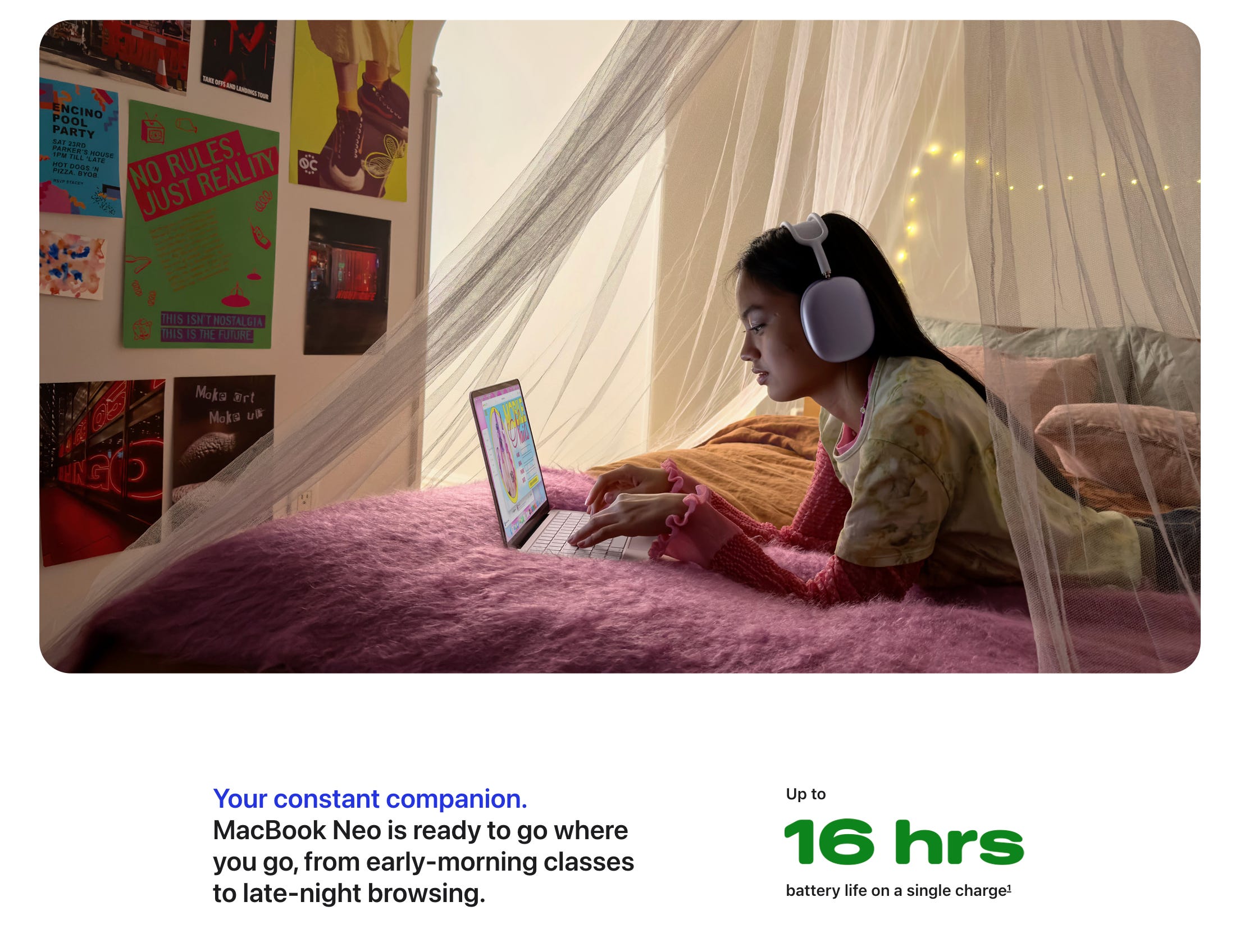
Considering the growing anti-screen sentiment, this particular pitch on the MacBook Neo page seems especially tone-deaf. A screen-based device pitched as “your constant companion”.
If I park my car under the wrong tree in London, it sometimes looks as though Big Bird had too much curry the night before
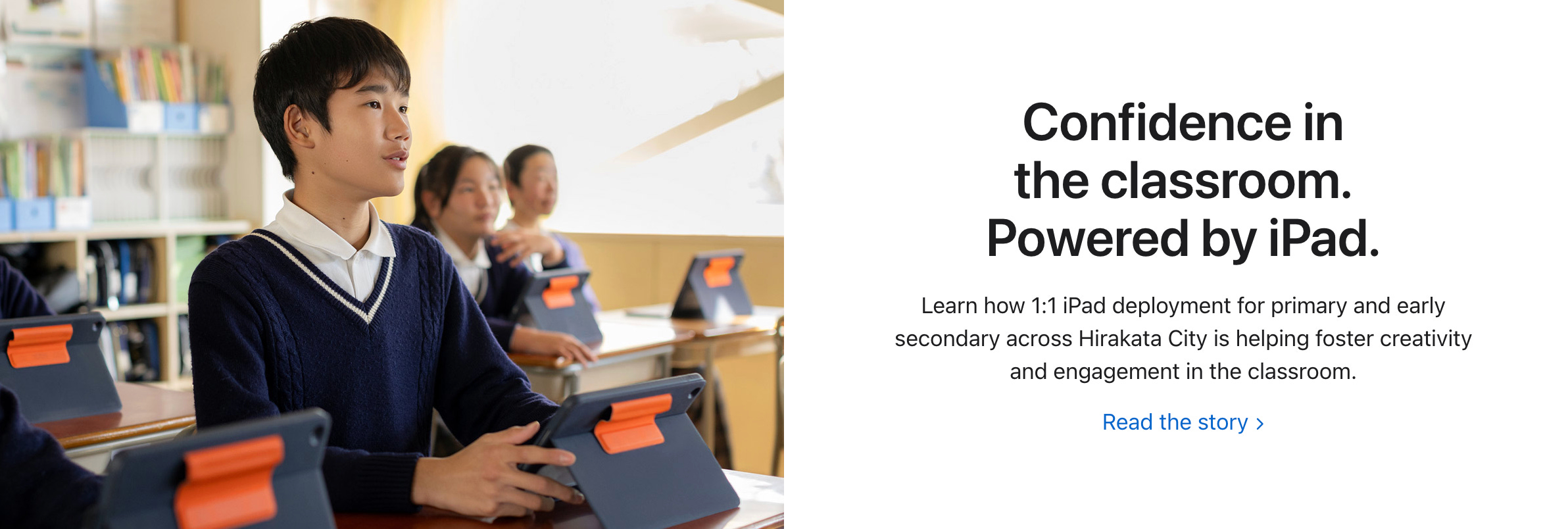
More cynically, Apple also thinks EdTech is successful when they achieve “1:1 device deployment”, AKA selling to millions of children worldwide via their schools:
And Ask Jeeves before that?
Google claims that 53% of website visits are likely to be abandoned if pages take longer than 3 seconds to load - that’s how impatient we have become.
(Yiddish) a dolt who is a habitual bungler. What a word.